
Dominik Müller is honored in the US
Anyone in Germany looking for an expert on high blood pressure is likely to very quickly land at the Max Delbrück Center. Professor Dominik Müller, who has spent most of his scientific career here, is widely recognized for his research on salt – especially on how high intake affects blood pressure and human health. Since 2010, Müller has, together with Professor Ralf Dechend, co-led the research group on Hypertension-caused End Organ Damage at the Experimental and Clinical Research Center (ECRC), a joint institution of Charité – Universitätsmedizin Berlin and the Max Delbrück Center.
Müller’s singular reputation hasn’t gone unnoticed across the Atlantic. The American Heart Association, the largest and oldest cardiovascular society in the United States, has honored him with its Excellence Award for Hypertension Research. For a European, this is a significant distinction. Only two other scientists living in Germany have previously received the award: in 1992, Professor Detlev Ganten, Founding Director of the Max Delbrück Center, and in 2007, Professor Friedrich Luft, Founding Director of the ECRC. Müller accepted the award on September 6 at the Hypertension Scientific Sessions 2025 meeting in Baltimore, Maryland.
A true team player
„“Of course, I’m happy about receiving this award,” says Müller. “But I want to stress that it doesn’t belong to me – it belongs to my entire team. I haven’t personally conducted a single experiment from start to finish in over 15 years.” Müller, who raised four children with his wife while working full time, is a true team player. At the Max Delbrück Center and the ECRC, he’s one of the few scientists who shares the leadership of a research group.
He was nominated for the award – widely regarded as the most prestigious in hypertension research – by U.S. colleague Professor Allen Cowley of the Medical College of Wisconsin, who received the award himself in 1997 along with two other researchers. Müller knows Cowley but has never worked with him. “That makes it even more meaningful to me – that he’s aware of our work and believes in it,” Müller says.
Even without the nomination, it would be hard to overlook Müller’s contribution to global hypertension research. In collaboration with other groups, he was the first to show that a high-salt diet not only drives up blood pressure, but also impairs energy production by mitochondria – the energy producing machinery inside cells. This energy shortfall causes certain immune cells called macrophages to become more inflammatory, which may raise the risk of cardiovascular disease. Müller also discovered that salt stimulates T‑helper cells to produce more pro-inflammatory signaling molecules, which can worsen autoimmune diseases such as multiple sclerosis.
“I’ve always found inspiration at the edges – where disciplines overlap and surprising insights emerge,” says Müller. He doesn’t see hypertension as a disease of a single organ, but as the result of a complex interplay of factors, including diet, the microbiome, and the immune and cardiovascular systems. A few years ago, for example, his team showed that fasting and a Mediterranean diet can reduce blood pressure in people with prediabetes.
Free from conventions
What drives me isn’t science – it’s people.
“What drives me isn’t science – it’s people,” Müller says. Conventions are of little concern to him. The scientist, who prefers not be defined by rigid categories, is known for offering everyone to address him with informal German “du,” even in professional settings. In testament to his causal nature, Müller did not wear a suit and tie to the ceremony – despite the formality of the occasion.
And his talk on September 6 likely surprised some in the audience – at least those who don’t know him well. Rather than focusing on his successes in hypertension research, Müller spoke about how science can be made more resource-efficient and sustainable. “Because in the end,” he asks, “what good is all our work if we’re destroying the very foundations of life?”
Text: Anke Brodmerkel
Further information
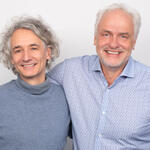
Photo for download
Prof. Dr. Dominik Müller
© Felix Petermann, MDC
Kontakte
Prof. Dr. Dominik Müller
Co-Group Leader, Hypertension-caused End Organ Damage (together with Prof. Dr. Ralf Dechend)
Experimental and Clinical Research Center (ECRC)
+49 30 450 – 540286
dominik.mueller@mdc-berlin.de
Gunjan Sinha
Editor, Communications
Max Delbrück Center
+49 30 9406 – 2118
gunjan.sinha@mdc-berlin.de or presse@mdc-berlin.de
- Max Delbrück Center
The Max Delbrück Center for Molecular Medicine in the Helmholtz Association aims to transform tomorrow’s medicine through our discoveries of today. At locations in Berlin-Buch, Berlin-Mitte, Heidelberg and Mannheim, our researchers harness interdisciplinary collaboration to decipher the complexities of disease at the systems level – from molecules and cells to organs and the entire organism. Through academic, clinical, and industry partnerships, as well as global networks, we strive to translate biological discoveries into applications that enable the early detection of deviations from health, personalize treatment, and ultimately prevent disease. First founded in 1992, the Max Delbrück Center today inspires and nurtures a diverse talent pool of 1,800 people from over 70 countries. We are 90 percent funded by the German federal government and 10 percent by the state of Berlin.


