
Support throughout the research process
The new Data, Information and Publication Services department, or DIP Services for short, is intended to serve as a central point of contact for scientists at our center, supporting them throughout the entire research process. Department Head Dr. Stefanie Seltmann and her five-person team provide access to literature, for example, advise researchers on how best to collect, process and store data. In keeping with the principles of open science, they also help them publish and archive it in ways that make it available to other research groups.
Ms. Seltmann, why does the Max Delbrück Center have a new department?
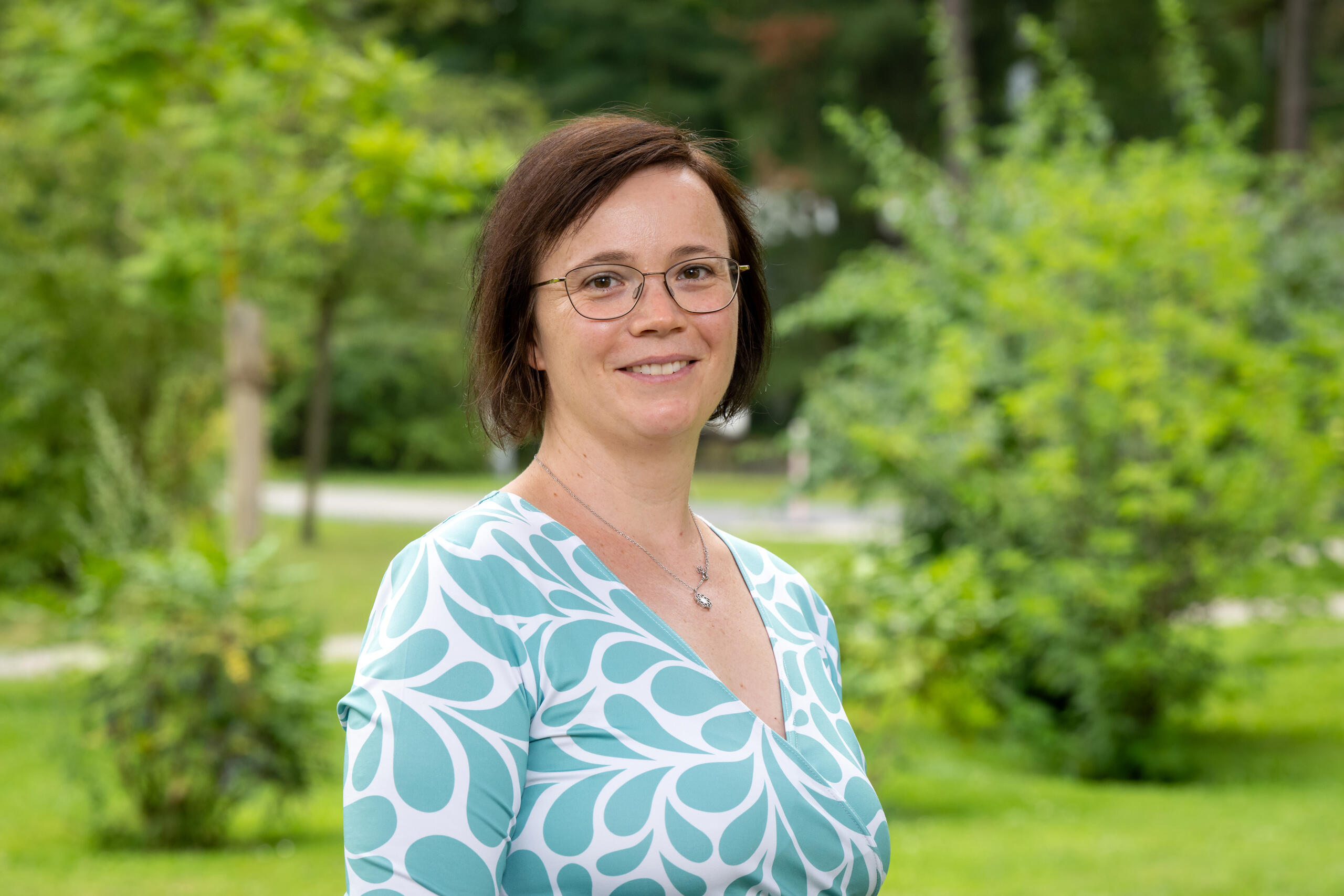
Dr. Stefanie Seltmann
Stefanie Seltmann: Until now, our center had a library as well as a Research Data Management department. Their responsibilities naturally overlap: topics such as data, licenses, publications, open access and open science concern both areas and thus, we have already collaborated in the past. With our new department, DIP Services, we want to pool our expertise. We aim to be a central point of contact for our scientists, supporting them throughout the entire research process. We chose a new name to make this clear. The library will remain part of our department, with the same contact persons as before.
What kinds of questions can our researchers bring to you and your team?
It starts with literature searches. We provide access to scientific journals, e‑books and databases, acquire and license scientific information resources, and advise researchers on finding specific information. Of course, books and documents can still be borrowed from us on site or obtained through interlibrary loan.
We also advise our researchers on all aspects of the scientific publishing process, including publication options and open access, as well as newer models such as ‘diamond open access.’ We provide guidance on costs, funding opportunities for publications and data management, and copyright and usage rights.
In addition, we work with scientists to determine how best to collect and publish their research data and make it available to others. We support researchers in creating data management plans, help them select repositories and obtain DOIs, and manage services such as the electronic lab notebook and the protocols.io platform, where experimental methods and laboratory protocols can be shared.
Finally, we ensure reliable, quality-controlled records of publications and other research outputs, which provide the basis for reports, evaluations and applications.
We are currently restructuring and discussing as a team exactly which services we want to offer in the future. Until then, all existing services will continue unchanged. And we will continue to work closely with the technology platforms.
An expert in data management
What did you do before joining us?
I originally studied bioinformatics and then developed various international repositories for stem cell data at Charité – Universitätsmedizin Berlin and Fraunhofer IBMT. A major focus of my work was how best to standardize the information. Most recently, I worked at the Berlin Institute of Health as a Data Steward for the Clusters of Excellence at Berlin’s universities and Charité, where I worked with researchers from a range of disciplines on their data management.
What are your goals for the Max Delbrück Center?
First, I want to raise the visibility of our department. Our researchers should know that there is one place they can turn to with all of their questions about literature, data, publications and research output records.
Second, we want to work with IT to reorganize how we manage and store data. Storage needs are currently growing faster than budgets. Yet some storage capacity is occupied by data that is no longer needed or exists in multiple copies. Other data takes up expensive storage space even though it could be archived instead. Together with IT, which has already done a great deal of valuable groundwork in this area, we want to develop criteria for what should be retained, for how long and in what form. We will also offer training on these issues for our scientists.
And, very importantly, I want to further strengthen the reproducibility of our research in keeping with the principles of open science. Open access is one part of this. Publishing data and software should become a routine part of the publication process, as should documenting protocols and analysis workflows. Our goal is to make research at the Max Delbrück Center more transparent and more useful to others. Data and methods should still be easy to find and use ten years from now. Not simply because funders may require it, but so that other teams can benefit from our work — and science as a whole can advance more quickly.
Interview: Anke Brodmerkel


