
Meeting the next generation of physician-scientists
The Max Delbrück Center and Berlin Institute of Health at Charité (BIH) hosted the Summer School and meet-up for Emerald, a unique training program for physician-PhDs. Organized by Dr. Michaela Herzig from the People & Culture Department at the Max Delbrück Center in Berlin and Dr. David Brena, Emerald’s Program Manager at the Centre for Genomic Regulation in Barcelona, the event brought together a community of 20 physician-scientists working at 7 host institutes in 6 countries across Europe. In this interview, they share some highlights, along with future plans.
Can you briefly explain what Emerald is?
David Brena: The idea behind Emerald was to create the first European-wide PhD program for medical doctors. Sometimes there’s a disconnect between what happens in the clinic and what is happening in the lab. We want to bring clinicians and top-notch technologies used in fundamental research closer together by training the next generation of medical doctors in research.
At the end of September, they gathered in Berlin for the Emerald summer school and community meet-up. Can you share some highlights?
Michaela Herzig: Sure! Emerald consists of seven European partner institutes including the Max Delbrück Center. We were thrilled to welcome everybody here in Berlin, and expand the network. At the BIH, for example, we had three very engaging and equally exciting presentations by clinician-scientists. They were not only about biomedicine. At the emergency unit, a doctor discussed discharging patients. That’s almost a mystery. His project was to analyze and find better metrics to decide which patients should be discharged. With this sort of scientific training for clinicians, you can go in all kinds of directions. These talks were super inspiring.

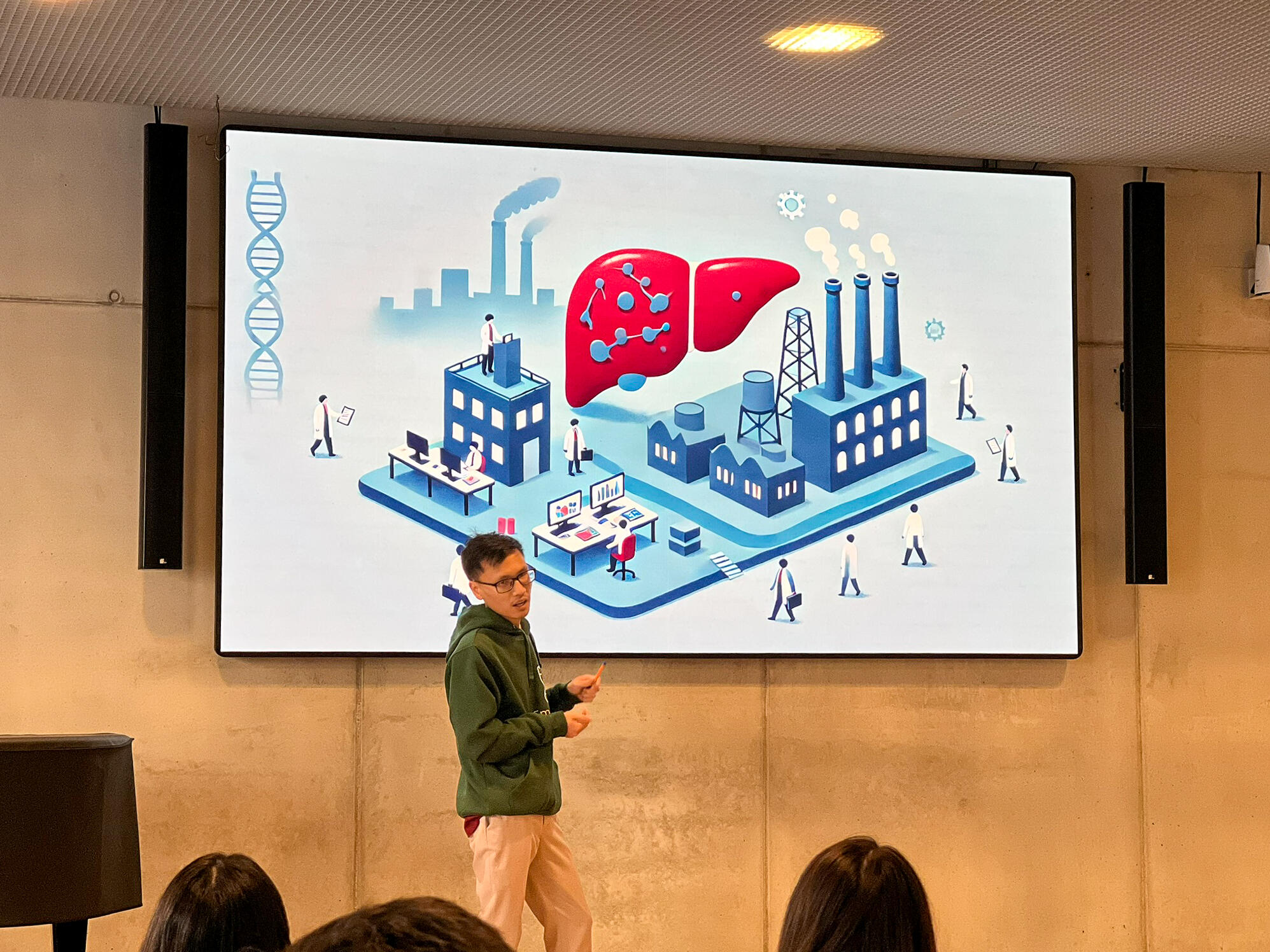
Brena: For the students, it was a full week of modules to train skills tailored to their PhDs. The first two days were about mastering data visualization. The sessions were really well-received because they are already starting to generate data — big data. And the fellows had their first training in resilience, which is quite timely for second years, when usually their motivation is going down because experiments start failing. These things are innate to research. Also, this year the fellows presented their projects as pitches to different target audiences: a high-school student, an elderly patient, a journalist, or a policy maker.
How did the pitches catch your attention?
Brena: One student from the Rehm Lab at the Max Delbrück Center, Juan Pablo Ortiz Aguirre, studies CAR T‑cell therapies. He brought a balloon, which represented the tumor cells, and then he tried to kill them. But he had to remove a barrier, which represented the tumor microenvironment, before he could pop the balloon. This kind of exercise is cool because you get ideas on how to communicate better.
Special challenges – and opportunities
There was also a career round table.
Herzig: The round table was mainly with the clinician scientists from BIH, who are already working as researchers and physicians. It was a very lively discussion! However, it became clear that working as a clinician and a researcher may be challenging. Both professions are time-demanding. Considering the pressure to publish and to develop new technologies and apply for patents, a dual career may be difficult. Some of the Emerald fellows wondered if they would want to continue on a path like this or switch to research to achieve their career goals?
Brena: What Michaela is mentioning is super important. We want to train the next generation of physician-scientists. But they can also choose to be a pure clinician, or a pure scientist. At the end, we’re training them to speak both languages. Wherever they go, they will have a positive impact, bringing both sides a bit closer.
Organizing such an event must be a lot of work. What was most rewarding to you?

Herzig: After all these last-minute logistics, it was really nice to meet everybody in person. They are a kind group of people.
Brena: Michaela did an amazing job organizing! Probably one of the most rewarding things to see is the students grow. Since our first meeting in Barcelona, you can see how they are developing, personally, professionally, but also scientifically, in terms of the type of questions that they ask now.
Are there any future events that you’re excited about?
Herzig: There will be another summer school in 2025, at the Netherlands Cancer Institute in Amsterdam.
Brena: It is very important to build a feeling of community. This is particularly relevant for these people with hybrid physician-scientist careers.
Because they can feel stuck in the middle?
Brena: Exactly. That’s also why we started a peer support group with facilitated sessions once per month. We would like them to know that they are not alone, and of course, that there is support from the network, but also from their special community.
Interview: Zoé Valbret


