NEDAMSS patients and scientists meet
On 18 April 2026, families affected by NEDAMSS – short for Neurodevelopmental Disorder with Regression, Abnormal Movements, Loss of Speech and Seizures – will gather with scientists and clinicians at the Berlin Institute of Medical Systems Biology of the Max Delbrück Center in Berlin (MDC-BIMSB). The patient-focused event will bring together patients, families, and the researchers working to understand the disease. The day will begin with a group breakfast. After an official welcome, scientists will present their research, followed by a tour of Dr. Jakob Metzger’s Quantitative Stem Cell Biology lab. The event is supported by the Eva Luise and Horst Köhler Foundation, which funds research into rare diseases.
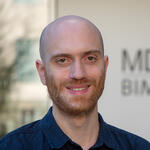
In the following interview, Metzger discusses the purpose of the event:
What is NEDAMSS, and why is it so important to raise awareness?
NEDAMSS is an extremely rare genetic disorder that often begins in early childhood. The disease is associated with mutations in the IRF2BPL gene, which lead to severe neurological symptoms, often after a period of apparently normal early development. Children can also lose previously acquired abilities such as speech or motor skills.
What role does the Eva Luise and Horst Köhler Foundation play in your work?
The foundation provides financial support for research on rare diseases. Together with our clinical collaborator Hendrik Rosewich, Director of the Clinic of Pediatrics and Adolescent Medicine at the University Children’s Hospital Tübingen, we have been receiving funding for our research on NEDAMSS for several years now. Their funding is essential for projects like ours to move forward. Our research is part of the “rare to common” focus of the foundation: by studying rare diseases, we can uncover fundamental biological processes that may also be relevant in more common neurological disorders, and the methods and technologies that we develop can eventually also be used in other disorders.
How did the idea for a patient-day come about?
The foundation organizes a number of events such as a yearly Rare Disease Symposium, which will take place on April 17, 2026. This year, the symposium will be combined with a patient day at BIMSB on the following day. The IRF2BPL Support Group Europe, a key patient organization in the IRF2BPL community, is also involved in organizing the day.Part of the foundation’s mission is to actively connect stakeholders – families, researchers, and clinicians. Such events promote exchange and strengthen the sense of a joint mission.
How could your research help to develop potential treatments for NEDAMSS?
Very little is known about how IRF2BPL mutations affect neurological function – we don’t yet fully understand the protein’s role in healthy cells. Our approach is to first understand the disease at a molecular level. We study how mutations affect neuronal development and function using genetically engineered stem cell models. We also grow patient-derived organoids and compare them to healthy organoids to identify and characterize the differences. Once we understand those mechanisms, we look for ways to counteract these effects – specifically by identifying compounds that can reverse disease-related cellular phenotypes.
What is the most challenging aspect of your research?
The biggest technical challenge is identifying a phenotype that is robust and relevant for drug screening. In other words, the characteristics of affected cells or organoids that we want to use as benchmarks for determining whether a drug is effective. For example, there is some evidence that one hallmark of the disease is that the affected proteins form clumps inside cells. We might then look for a drug that either alleviates or prevents this clumping.
Why is direct interaction between families and researchers so valuable?
It changes how both sides think. Researchers gain a deeper understanding of the real-world impact of the disease, which helps guide their work. Families, in turn, gain insight into the research process – what is possible, what takes time, and where progress is being made. That mutual understanding is crucial for moving forward.
What do you hope participants take away from the day?
Ideally, they leave with a sense of connection and momentum. For families, that means not feeling alone and seeing that research is actively progressing. For researchers, it means renewed motivation and a clearer sense of purpose. Ultimately, everyone should feel that they are part of a shared effort to develop therapies for this severe disease.