Our first “Global Fellow” postdocs
The Max Delbrück Center warmly welcomes the first winners of our Global Fellowship Program: Dr. Jorge Martínez-Cano and Dr. Sakshi Shambhavi. Martínez-Cano will be studying how cells transition from premalignant to malignant states in the labs of Drs. Leif Ludwig, Yoichiro Sugimoto and Simon Haas. Shambhavi will be exploring the molecular basis of T‑cell aging in the labs of Drs. Oliver Daumke and Katja Simon.
“These fellows will be working in multiple labs simultaneously,” explains Sugimoto, Group Leader of the Molecular Mechanisms of Environment Sensing lab. The idea is to create a structurally embedded mechanism that fosters the exchange of expertise among different labs, he adds. The fellows will facilitate new collaborations among scientists who may not have previously worked together to address novel scientific questions that the labs could not pursue on their own.
Toward Strategy 2030
The program grew out of a “Grand Challenge Strategic Action” to recruit outstanding international talent and to promote interdisciplinary research, which was spearheaded by Dr. Marie Vidal from the Innovation and Entrepreneurship Department, Sugimoto and Ludwig, who heads the Stem Cell Dynamics and Mitochondrial Genomics lab. Such strategic actions are intended to implement goals outlined in the Max Delbrück Center’s Strategy 2030.
“We were discussing ways to establish more interdisciplinary collaboration at our center and we thought it would be great if we could host a fellowship with this as a requirement,” Ludwig explains. The Helmholtz Association, which offers its own Global Fellow Program, is supporting the fellowship with €200,000 in additional funding.
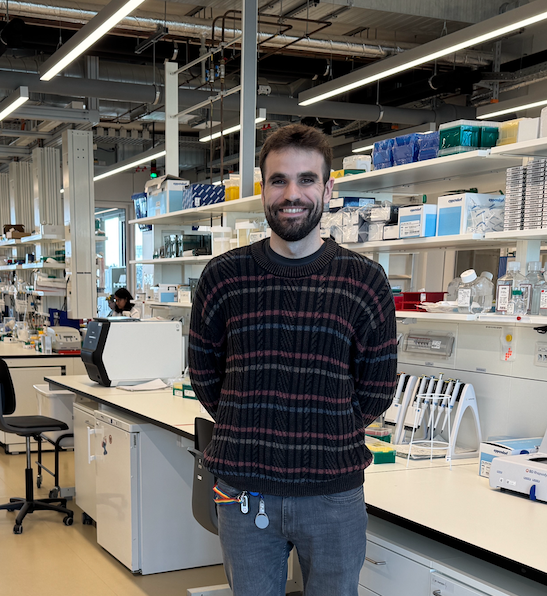
Dr. Jorge Martínez-Cano
Applicants must submit a proposal for independent research projects and choose at least two labs with which they would like to work. Proposals should address how their research will contribute to solving grand challenges in biomedical research. “We wanted to encourage a bottom-up approach so that we would get some cool, creative ideas,” Sugimoto adds. The fellowship offers three years of support, including salary, research funds, training, travel and opportunities to explore the commercial potential of the research.
The new fellows
Martínez-Cano joined our center from the Centro de Biología Molecular Severo Ochoa in Spain. He will be working in the Ludwig lab, which studies blood stem cell dynamics using single-cell technologies, the Haas lab, which investigates how cancer interacts with neighboring cells, and the Sugimoto lab, which explores how cellular disruptions in oxygen sensing and nutrient availability can contribute to disease and aging. Martínez-Cano will combine different approaches and technologies to trace how early abnormal cells emerge and evolve toward cancer.
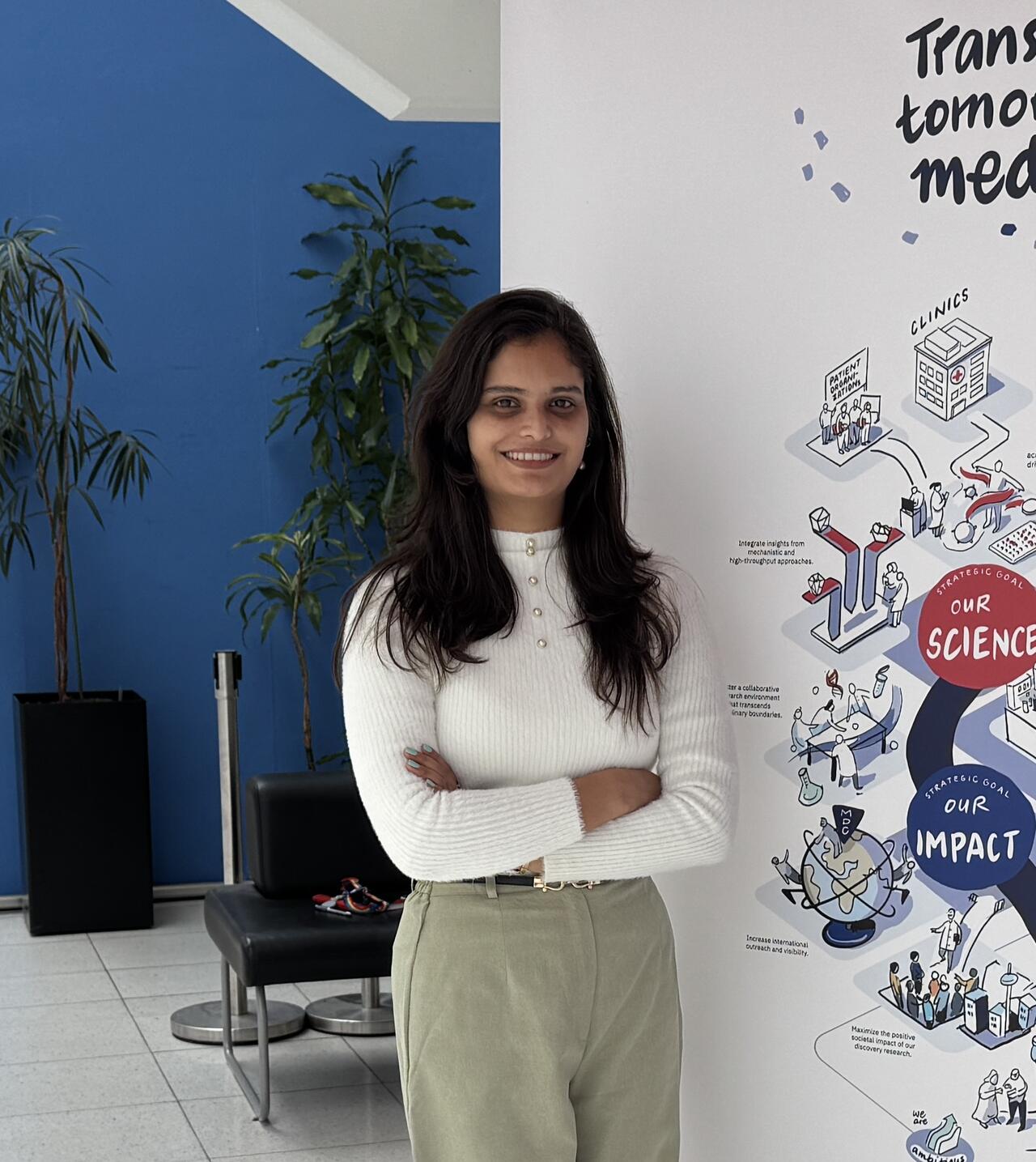
Dr. Sakshi Shambhavi
Shambhavi was previously a postdoc at the Council of Scientific and Industrial Research in India. She will be working in the Simon lab, which studies cellular recycling pathways, and the Daumke structural biology lab. Shambhavi’s research will focus on the molecular basis of T‑cell aging – examining how mitochondria influence the function of immune cells over time.
A third fellow is expected to join the program later this year.
“I am thrilled to see this program come to fruition,” says Vidal, who helped launch the fellowship before joining the Innovation and Entrepreneurship Department. “This program is an excellent example of how grassroots ideas drive institutional innovation. By building a vibrant, globally connected community, we are creating the collaborative environment necessary to turn high-level research into tangible impact, moving us toward our 2030 strategic goals.”
Text: Gunjan Sinha