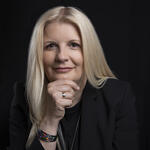
Sara De Vincentiis awarded Marie Curie Fellowship
Congratulations to Dr. Sara De Vincentiis on winning a Marie Skłodowska-Curie Actions (MSCA) Postdoctoral Fellowship!
De Vincentiis began working in the Stem Cell Modeling of Development and Disease lab of Dr. Mina Gouti in September of 2024. She won a two-year EMBO Postdoctoral Fellowship in September of 2025 and will now further her research with a two-year MSCA Postdoctoral Fellowship beginning September 1, 2026.
De Vincentiis is expanding on the Gouti lab’s pioneering work developing 3D neuromuscular organoids from human induced pluripotent stem cells. These organoids recapitulate key features of spinal cord neurons and skeletal muscle and their functional interaction — providing powerful platforms to study neuromuscular diseases and to screen new drugs. Such organoids can also be grown from cells derived from individual patients to model patient-specific features of disease.
“We are working to make these organoids even more physiologically relevant,” explains De Vincentiis. “Right now, they don’t fully mature into adult tissue states, for example, and this limits their use in modeling late-onset neuromuscular diseases.”
One reason for their inability to fully mature is the way they are cultured. Because organoids are generally grown in Petri dishes, they are not exposed to the same mechanical forces such as pressure, friction and tension, that exist in the body. Moreover, because they are grown in isolation, they lack systemic input from other tissues.
Bioengineering organoids
De Vincentiis is using bioengineering approaches to recreate key features of the physiological environment that are missing from current organoid models. She is applying mechanical forces to neuromuscular organoids to encourage them to mature further. She also plans to combine them with cerebral organoids to form “assembloids,” two or more organoids of different tissues that are cultured together and naturally form connections. The brain organoids would introduce brain-like inputs into the neuromuscular system.
Both tasks are challenging and require carefully controlled bioengineering approaches, she says, and this continues to be the primary focus of her research. She grows neuromuscular organoids in flasks, for example, where they are free-floating. “We have to explore how to apply physiologically relevant forces from multiple directions to free-floating organoids that are constantly moving in three dimensions.”
“I am thrilled to have been awarded both fellowships, which will allow me to explore how bioengineering can be coupled with organoid models to more closely recreate the environment of the human neuromuscular system,” she adds. “The ultimate goal is to create more accurate models of adult-onset neuromuscular diseases.”
Text: Gunjan Sinha