Ludwig Lab
Stem Cell Dynamics and Mitochondrial Genomics
Profile
We seek to understand how blood and immune cell populations are generated, maintained, and remodeled throughout human life. We are interested in the dynamics of hematopoietic stem and progenitor cells, the clonal architecture of human hematopoiesis, and the mechanisms that govern the expansion, persistence, and adaptation of immune cells across health and disease.
To study these processes directly in humans, we leverage naturally occurring genetic variation, particularly mitochondrial DNA mutations, as endogenous genetic barcodes for clonal tracing and the reconstruction of cellular lineage relationships in vivo. A central goal is to uncover how cellular states, lineage history, and genetic variation shape cellular fitness and function across human biological systems.
Beyond their utility as clonal markers, mitochondrial DNA mutations can themselves have profound biological consequences. We therefore investigate how inherited and acquired genetic variation, particularly within the mitochondrial genome, influences metabolism, gene regulation, immune function, and disease. By integrating multimodal single-cell profiling and functional studies, we seek to understand how molecular variation gives rise to cellular phenotypes, how these phenotypes impact tissue and organ function, and how they ultimately contribute to hematologic disorders, mitochondrial diseases, and other human pathologies.
Our work combines experimental and computational approaches across clinical samples and model systems, with the goal of linking genetic variation, cellular behavior, and disease phenotypes within a systems medicine framework.
The laboratory is jointly supported by the Berlin Institute of Health (BIH) and the Berlin Institute for Medical Systems Biology (BIMSB) at the Max Delbrück Center. We maintain close collaborations with multiple clinical and research departments at Charité – Universitätsmedizin Berlin, where Leif S. Ludwig holds a Heisenberg Professorship, fostering translational and systems medicine research at the interface of genetics, immunology, hematology, and human disease.
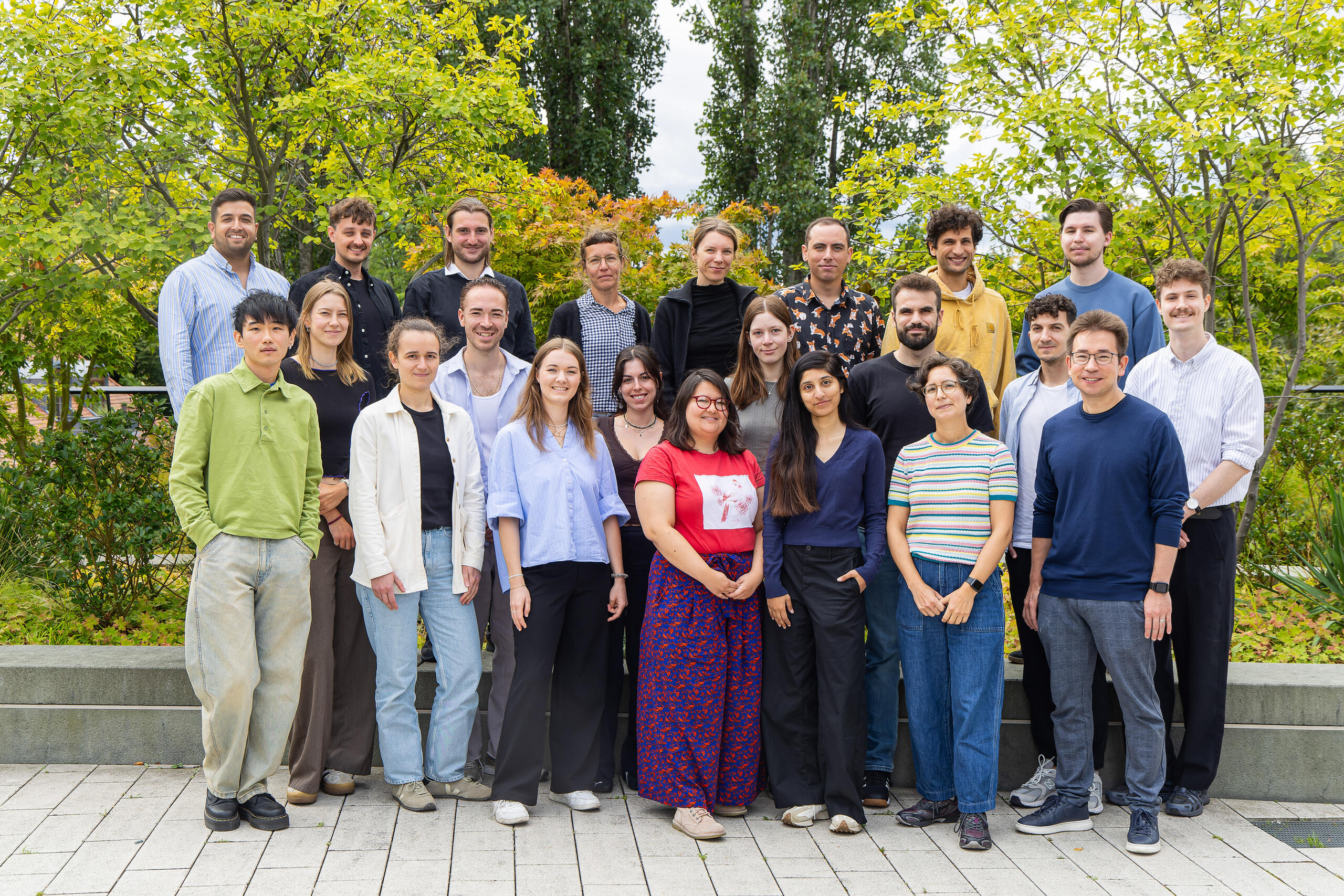
Team












Research
Human Blood and Immune Cell Dynamics
A central goal of our laboratory is to understand how blood and immune cell populations are generated, maintained, and remodeled throughout human life. We are interested in the dynamics of hematopoietic stem and progenitor cells, the clonal architecture of human hematopoiesis, and the mechanisms that govern the expansion, persistence, and adaptation of immune cells across health and disease.
To study these processes directly in humans, we leverage naturally occurring genetic variation, particularly mitochondrial DNA mutations, as endogenous genetic barcodes for clonal tracing and the reconstruction of cellular lineage relationships in vivo. This enables us to investigate how individual stem cells contribute to blood production, how immune cell populations expand and persist over time, and how cellular fitness shapes the composition of tissues.
By integrating insights from human genetics, clinical observations, and functional biology, we seek to uncover fundamental principles of cellular population dynamics and their dysregulation in hematologic disorders and other diseases.
Mitochondrial Genetics, Cellular Fitness and Disease
Mitochondria play a central role in cellular metabolism and carry their own genome. Mutations in mitochondrial DNA are associated with a diverse spectrum of congenital and acquired disorders, yet the mechanisms linking mitochondrial genotypes to cellular and clinical phenotypes remain incompletely understood.
We investigate how inherited and acquired mitochondrial DNA variation influences cellular metabolism, gene regulation, immune function, and disease. A particular focus is understanding how mitochondrial genetic integrity affects cellular fitness and selection across different cell types and states. By studying primary human samples and model systems, we aim to define how mitochondrial dysfunction gives rise to cell type-specific phenotypes and contributes to human disease.
More broadly, we are interested in how somatic mitochondrial genetic variation accumulates throughout life and influences cellular behavior, aging, and tissue homeostasis.
Single-Cell and Multi-Omic Technologies
Many of the biological processes we study can only be resolved at the level of individual cells. We therefore develop and apply single-cell and multi-modal genomic approaches that enable the simultaneous characterization of genetic variation, chromatin accessibility, gene expression, protein abundance and metabolic aspects.
These technologies allow us to connect cellular lineage history with molecular state and function, providing a framework to study clonal dynamics, mitochondrial genetics, and human disease at unprecedented resolution. Together with computational approaches, they enable quantitative analyses of cellular populations across human tissues in health and disease.