The innovator
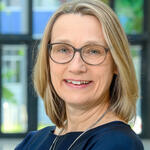
On a Monday morning in early October, Professor Maike Sander’s schedule is packed with back-to-back meetings until 10 p.m. For the Scientific Director and Chair of the Board of the Max Delbrück Center in Berlin, such 12 hours days are the norm. Sander took over the directorship of the center in 2022. Beginning in 2025, she will also serve as vice president of the Helmholtz Association and additionally, head up Helmholtz Health, one of six primary research fields of the Helmholtz Research Centers. With her multiple roles, Sander has a lot she wants to accomplish.
Since taking the helm at the Max Delbrück Center, she has accelerated efforts to reorganize the center’s research around a common goal: a more holistic and preventative approach to treating disease. There is a growing understanding that many diseases share common mechanisms and affect more than a single tissue or organ. Diabetes raises the risk of developing Alzheimer’s disease, for example, and cardiovascular disease affects blood vessels in all organs, not just the heart.
Advancements in technology and AI-driven innovations will transform medicine through precision prevention.
The technologies available to researchers at the Max Delbrück Center are enabling them to not only unravel the molecular underpinnings of disease, but also to understand and track how they develop. This knowledge opens myriad opportunities to intervene – before health slides into disease. “Advancements in technology and AI-driven innovations will transform medicine through precision prevention,” she says.
To accomplish this, Sander aims to better align biomedical research at both the Max Delbrück Center and at Helmholtz Health to take advantage of synergies. She wants to develop a more goal-oriented approach that taps expertise across scientific disciplines to solve problems that are poorly addressed by the existing research infrastructure.
“The academic reward structure favors individual credit and discourages teamwork,” she explains. It was large collaborations that accomplished the Human Genome Project or shed light on the genetic causes of common diseases. The open question is: “Can we get our labs to work together in a similar way to focus on precision medicine and prevention of disease?”
A world beyond Germany
Sander grew up in Göttingen, Germany. She was exposed to different cultures at an early age through her mother, who is a scholar of Sanskrit – part of the Indo-European language family – and taught linguistics at the university level. Her mother sometimes worked with anthropologists in India and Pakistan on translating ancient texts. She made several trips to both countries – with a young Sander in tow. Sander’s mother also often hosted Buddhist and Hindu scholars and their families in her home. “Our house was always full of people from all over the world because of my mom’s weird profession.”
Despite being immersed in a world of languages, Sander was more interested in science. She enrolled in medical school at the University of Heidelberg and was drawn to the field of endocrinology. Endocrine disorders tend to cause vague symptoms that overlap with other diseases. Sander enjoyed the exercise of puzzling through symptoms and test results to come up with a diagnosis.

“If anyone had tried to turn me into a surgeon, I would have failed,” she quips. “I would have been like, ‘oh, this patient is bleeding to death. Let me first read the book to figure out why this is happening.’” Endocrinology just fit better with the way her brain worked, she adds. “I was never the type that could roll up my sleeves and just jump in the way emergency room doctors must. I was just always interested in understanding how things work.”
But her career wasn’t always smooth sailing. She faced challenges as a woman interested in academia in the late 1980’s – medical department heads were almost all men. A senior professor once called her career ambitions “cute,” she recalls, which “felt belittling.” But she didn’t let such comments discourage her – she largely ignored them.
In 1991, three years before she was due to graduate with her medical degree, she won a scholarship to conduct research at the University of California, San Francisco (UCSF). She was excited by the opportunity to travel and experience conducting research in a different country.
Sander only expected to stay for four months – but it turned into 31 years. At the time, San Francisco was bubbling with energy. It was right before the dot.com boom of the 1990s. There was an influx of freewheeling young people filled with optimism about the future. Sander found the lab work challenging, but rose to the occasion. Every time she scored a success, someone opened a door of opportunity. Sander decided to stay because “I never felt freer in my life,” she says.
Focus on diabetes
The most common endocrine disease was – and still is – diabetes. There were so many unanswered questions, she says. In the early 1990s, a revolution was taking place, fueled by tools that had become available to study the genome, including new tools to study the function of genes in mice. Sander continued her research career as a postdoc at UCSF trying to understand the genes in islet cells – a group of endocrine cells in the pancreas – that enable them to make insulin and other hormones. Since she had already been studying endocrine disorders, the focus on diabetes felt like a natural progression of her research interests.
She spent several years working with transgenic mice trying to understand how the different endocrine cell types develop and form an islet. As her understanding grew, her focus switched to gene regulation – for example, the proteins involved in instructing cells to make insulin. Her research over the decades has contributed to what today is a map of the factors that beta cells – one of the four types of endocrine cells in the islets – require to mature and make insulin.
My ultimate scientific goal would be to find new drugs or new intervention points to influence beta cell function.
In 1998, a breakthrough would make it possible for Sander to extrapolate her research to humans: developmental biologist James Thompson at the University of Wisconsin-Madison isolated the first human embryonic stem cell. By the early 2000s, researchers had begun using them to grow human tissues as models on which to do further experiments, such as drug testing. Sander eventually helped develop a protocol on how to turn human embryonic stem cells into insulin producing beta cells.
Today, the focus of her lab at the Max Delbrück Center is still on understanding basic mechanisms. Her team grows from stem cells, pancreatic islet organoids – mini versions of pancreatic islets – to better understand why insulin producing cells ultimately fail in type 2 diabetes. The organoids currently lack an immune and vascular system, so they aren’t truly representative of a human pancreas. But Sander hopes that another ongoing project will ultimately help make the organoids more realistic: She aims to combine different types of cells, pancreatic and vascular, for example, and immune cells onto microfluidic chips and manipulate them in ways to more accurately simulate a human pancreas.
“An accurate in vivo model could really help screen candidate drugs,” she says. “My ultimate scientific goal would be to find new drugs or new intervention points to influence beta cell function.”
Juggling act

Sander took the job as scientific director of Max Delbrück Center in 2022. Prior to her current role, she ran her own lab at the University of California in San Diego and was director of the Pediatric Diabetes Research Center. She was attracted to her new role by the opportunity to shape science at the level of an interdisciplinary research center. Sander was already familiar with the high quality of the Max Delbrück Center’s research – she was an Einstein Visiting Fellow between 2019 and 2022 and also spent time as a Humboldt Research Fellow at the center.
“I witnessed first-hand the excellence of the science here and saw an opportunity to help them to capitalize on it,” she says. This is reflected in the Max Delbrück Center’s new strategy 2030. The goal is to better understand how health progresses to disease on a molecular level, and to partner with industry and clinician scientists to develop new therapies to intervene.
When devising the strategy, “we also recognized that approaches from bioengineering are an opportunity for the Max Delbrück Center to develop cutting-edge technologies and therapies that can directly address medical challenges,” she says. To this end, Helmholtz recently launched a bioengineering initiative, which aims to “leverage the potential of bioengineering and expedite the transformation of biology-inspired technologies into marketable products.” Another Helmholtz program still in the planning phases will develop precision medicine and precision prevention strategies.
Sander is aware of challenges ahead. When asked how she plans to juggle her multiple roles, she nods, grins and then points out her busy schedule. The Max Delbrück Center and labs all across Helmholtz Health employ thousands of people. Breaking down research silos and forming collaborations will take time. But if she had to name one thing that her 31 years in the U.S instilled in her it would be an optimistic “can do” attitude. “I don’t know if I will succeed, but at least I have to try.”
Text: Gunjan Sinha