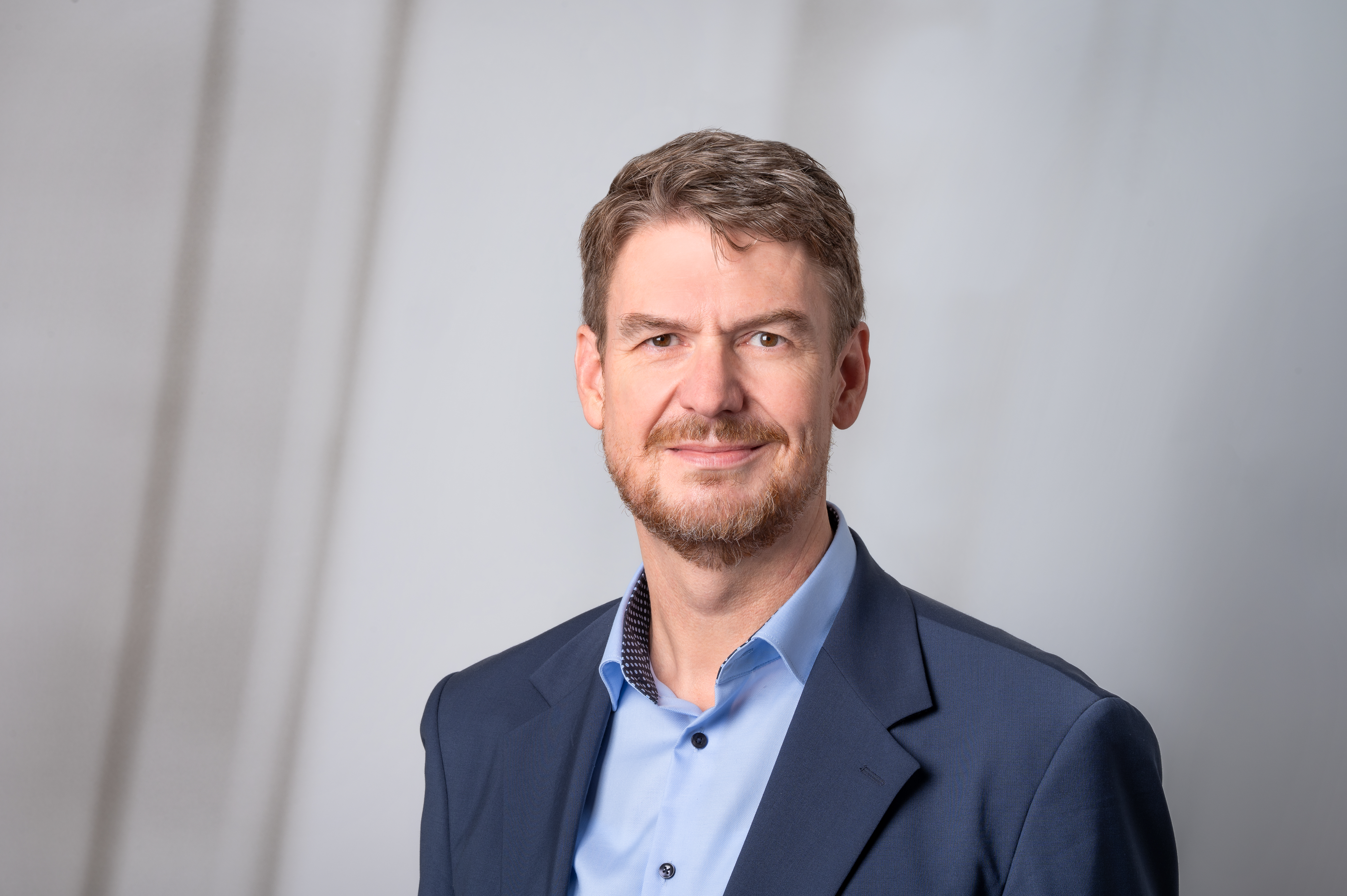
Johannes Backs joins HI-TAC as scientific director
Dr. Johannes Backs has been appointed scientific director of the Helmholtz Institute for Translational AngioCardioScience (HI-TAC) as of October, 2026. The physician and former interim director shares the role with vascular biologist Dr. Karina Yaniv, who joined HI-TAC as scientific director in April 2026.

HI-TAC is a Helmholtz Institute jointly founded by the Max Delbrück Center and Heidelberg University and its medical faculties in Heidelberg and Mannheim. Along with HI-TAC’s junior groups, both Yaniv and Backs conduct research at both locations.
“In recent years, we’ve learned a lot about the central role the cardiovascular system plays in our health and in the development of diseases,” says Yaniv. “The next challenge is to translate this knowledge into better approaches to prevention, diagnosis, and treatment. Johannes is an ideal partner for tackling these challenges swiftly and collaboratively.”
Bridging discovery research and clinical translation
Backs, who holds a professorship at the Deutsches Zentrum für Herz-Kreislauf-Forschung (DZHK), will continue to serve as director of the Institute for Experimental Cardiology at the Medical Faculty Heidelberg of Heidelberg University and Heidelberg University Hospital. He will devote half his working hours to HI-TAC, the development of which he has supported from the very beginning.
“I’m excited to work with Karina to further investigate how the heart communicates with the vascular system and other organs. We aim to identify new therapeutic approaches not only for cardiovascular diseases, but also for age-related metabolic and brain disorders,” he says. “Together with the new HI-TAC junior research groups and collaborating institutions in Berlin, Heidelberg and Mannheim, we will also work to translate these discoveries into new treatments and bring them to patients as quickly as possible.”
From molecular mechansims to drug targets
Backs has identified several potential drug targets in recent years. For example, he discovered that in patients with a severe inherited heart condition, RBM20 cardiomyopathy, a signaling protein called CAMK2D is overactive. His team blocked the signaling pathway and was able to prevent the disease in mice. To translate this finding toward the clinic, he is collaborating with a small pharmaceutical company that has developed an inhibitor of CAMK2D and is currently testing it in clinical trials.
Backs’ research has also revealed an important signaling pathway in broken heart syndrome that causes the enzyme calcineurin to become overactive. The condition, which primarily affects women after menopause and can be triggered by emotional stress, leads to acute heart failure. His team has found that a drug already approved for another indication may prevent stress-induced heart failure. The drug is currently being investigated in a clinical trial at the DZHK.
In heart failure with preserved ejection fraction (HFpEF), a common form of heart failure, Backs identified an overactive enzyme called HDAC4, which he has been studying for more than 20 years. To improve treatment of HFpEF and other cardiovascular conditions, he has launched a startup. The company is preparing clinical trials to test inhibitors of HDAC4 and related enzymes.
How the heart communicates with other organs
At HI-TAC, Backs will focus on how the heart communicates with other organs. Specifically, he will study how heart muscle cells interact with the inner layer of blood vessels, endothelial cells and with blood platelets. Preliminary findings show that this interaction is what causes the heart to stiffen in HFpEF. “We want to find therapeutic targets outside heart cells that are easier for new drugs to reach,” says Backs.
He will also explore how the heart communicates with adipose tissue. “In a mouse model of HFpEF, we found that when we specifically inhibit HDAC4, not only does this strengthen the heart, but the animals also develop less inflamed adipose tissue and are less likely to become overweight,” Backs explains. “This points to new therapeutic targets for obesity.”
In another project, Backs will investigate how the brain and heart communicate during a stroke, especially how signals from the brain may trigger the heart’s stress response.
Building HI-TAC’s leadership team
“With Karina Yaniv and Johannes Backs, HI-TAC brings together complementary strengths that are essential for successful translation,” says Dr. Maike Sander, Chair of the Executive Board of the Max Delbrück Center. “Karina brings deep expertise in vascular biology, while Johannes combines fundamental cardiovascular research with the perspective of a clinician-scientist and his close connection to the Medical Faculty Heidelberg. Together, they strengthen the bridge between discovery research and clinical application. I look forward to working with them.”
“Johannes Backs, an internationally renowned researcher and translational scientist, brings leadership and expertise that have helped shape HI-TAC from the beginning. HI-TAC exemplifies the strength of our research ecosystem: It combines outstanding heart and vascular research with systems medicine, creating the conditions needed to translate new findings into clinical applications more quickly. Together with Karina Yaniv, Johannes Backs will help raise the international profile of the emerging field of AngioCardioScience,” says Dr. Michael Boutros, Dean of the Medical Faculty Heidelberg.
“The Medical Faculty Mannheim has expanded cardiovascular research through its strength in angioscience and has raised its international profile through the European Center for Angioscience. The field investigates how blood vessels actively regulate organ function in health and disease,” says Dr. Sergij Goerdt, Dean of the Medical Faculty Mannheim. “With its two scientific directors, Backs and Yaniv, HI-TAC now brings the field of angioscience together with the expertise in cardiovascular science at Heidelberg University’s Medical Faculty. Together, they will advance the translation of findings from discovery science to benefit patients with cardiovascular diseases.”
- About Johannes Backs
Johannes Backs earned his doctorate in medicine at Heidelberg University. He later completed his clinical training in internal medicine at Heidelberg University Hospital and as a postdoctoral researcher in Dr. Eric N. Olson’s lab in the Department of Molecular Biology at the University of Texas Southwestern Medical Center. In 2007, he returned to Heidelberg University as an Emmy Noether Junior Research Group Leader funded by the German Research Foundation (DFG).
Today, Backs is Director of the Institute of Experimental Cardiology at the Medical Faculty Heidelberg of Heidelberg University and Heidelberg University Hospital, a professor at the DZHK, and spokesperson for the DFG-funded Collaborative Research Centre “Molecular Circuits of Heart Disease” at Heidelberg University. Backs has served as interim co-director of HI-TAC since 2024.
Text: Anke Brodmerkel
Further information
- HI-TAC
- Karina Yaniv begins professorship at HI-TAC, Mannheim
- Heart failure caused by an overactive protein
- Revier Therapeutics
- CRC 1550, Molecular Circuits of Heart Disease
Photo for download
Johannes Backs
© Benjamin Czernoch, University Hospital Heidelberg
Contact
Anke Brodmerkel
Editor, Communications and Marketing
Max Delbrück Center
+49 1522 175 77 95
anke.brodmerkel@mdc-berlin.de oder presse@mdc-berlin.de
- Helmholtz-Institute for Translational AngioCardioScience (HI-TAC)
HI-TAC is a Helmholtz Institute founded by the Max Delbrück Center in collaboration with the Heidelberg and Mannheim medical schools of Heidelberg University.
- Max Delbrück Center
-
The Max Delbrück Center for Molecular Medicine in the Helmholtz Association lays the foundation for the medicine of tomorrow through our discoveries of today. At locations in Berlin-Buch, Berlin-Mitte, Heidelberg, and Mannheim, interdisciplinary teams investigate the complexity of disease at the systems level – from molecules and cells to organs and entire organisms. Together with academic, clinical, and industry partners, and as part of global networks, we turn biological insights into innovations for early detection, personalized therapies, and disease prevention. Founded in 1992, the Max Delbrück Center is home to a vibrant, international research community of around 1,800 people from over 70 countries. We are 90 percent funded by the German federal government and 10 percent by the state of Berlin.