Launch of the Einstein Center for Early Disease Interception
Joint press release by the Max Delbrück Center, Charité – Universitätsmedizin Berlin, Berlin Institute of Health at Charité, and Technische Universität Berlin
Serious diseases often develop unnoticed over many years. By the time symptoms appear, organ damage is often too extensive to be reversed completely. In many cases, there are no effective treatments to stop diseases from progressing.
Researchers from twelve leading Berlin institutions are heading the charge to change the way we think about prevention. Using the latest technologies – including advances made by researchers from Berlin – they aim to unravel what happens inside cells at the very earliest stages of disease. Such knowledge will enable them to develop early interventions, when only individual cells are affected and diseases are still controllable.
The Einstein Center for Early Disease Interception (EC-EDI) is bringing together the necessary expertise to study such early disease mechanisms. The center is being officially inaugurated today at the Max Delbrück Center’s Berlin Institute for Medical Systems Biology in Mitte after a two-year preparatory phase. Invited guests include politicians, scientists and the public. The Einstein Foundation Berlin is funding the center with €6 million and is supporting the recruitment of young international talent with additional funds from the state of Berlin.
A dynamic network for key technologies

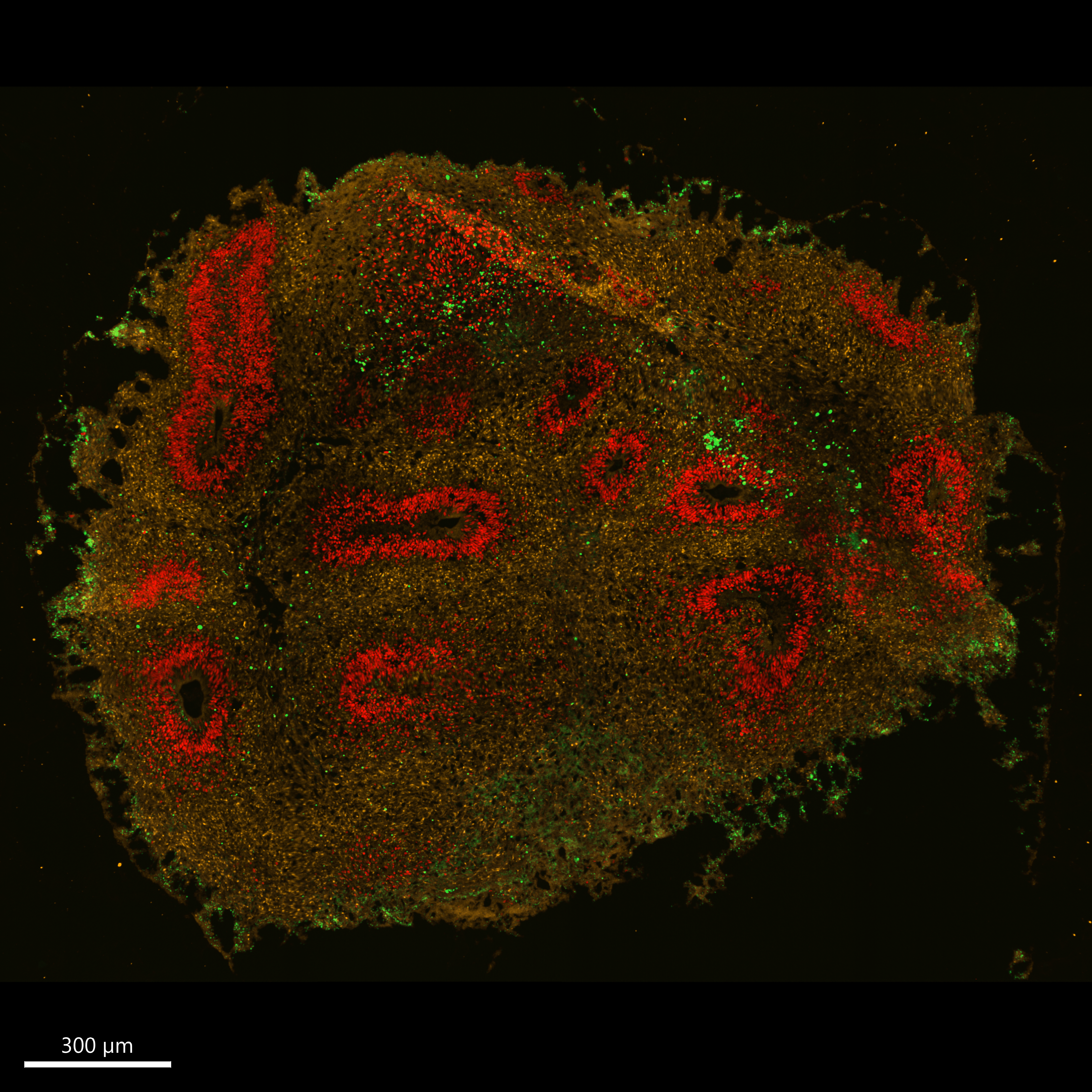
In this brain organoid, microplastic particles are visible, highlighted in green.
Over the next six years, researchers will further develop, integrate, and apply key technologies to the effort. These include single-cell multiomic and spatial biology technologies, patient-specific organoids, 3D bioprinting, and AI-based modeling of mechanisms and disease trajectories. A platform for cross-institutional collaboration will also be established to help translate research findings into clinical practice more quickly in partnership with industry and investors – while generating societal and economic value for the state of Berlin. Initial focus areas include respiratory and neurological diseases, such as inflammatory lung diseases, tuberculosis, Alzheimer’s disease, and multiple sclerosis.
Participants in EC-EDI include Charité – Universitätsmedizin Berlin, the Berlin Institute of Health at Charité, the Max Delbrück Center, Technische Universität Berlin, Freie Universität Berlin, Humboldt-Universität zu Berlin, and additional non-university institutions such as the Museum für Naturkunde and several Max Planck Institutes.
Statements from Einstein Center spokespersons
Professor Nikolaus Rajewsky (Head Spokesperson; Director of the Berlin Institute for Medical Systems Biology at the Max Delbrück Center and Professor at Charité):
“We are advancing molecular prevention and intervention – and aim to bring our research to patients as quickly as possible. Major breakthroughs do not arise solely in the clinic, in labs, or on a computer. The Einstein Center creates a shared, open platform with clear rules and short pathways. Clinicians, basic researchers, and data scientists will collaborate across institutions, as well as with companies and investors. This will enable us to work faster and will hopefully help further establish Berlin as a leading international hub in this field.”
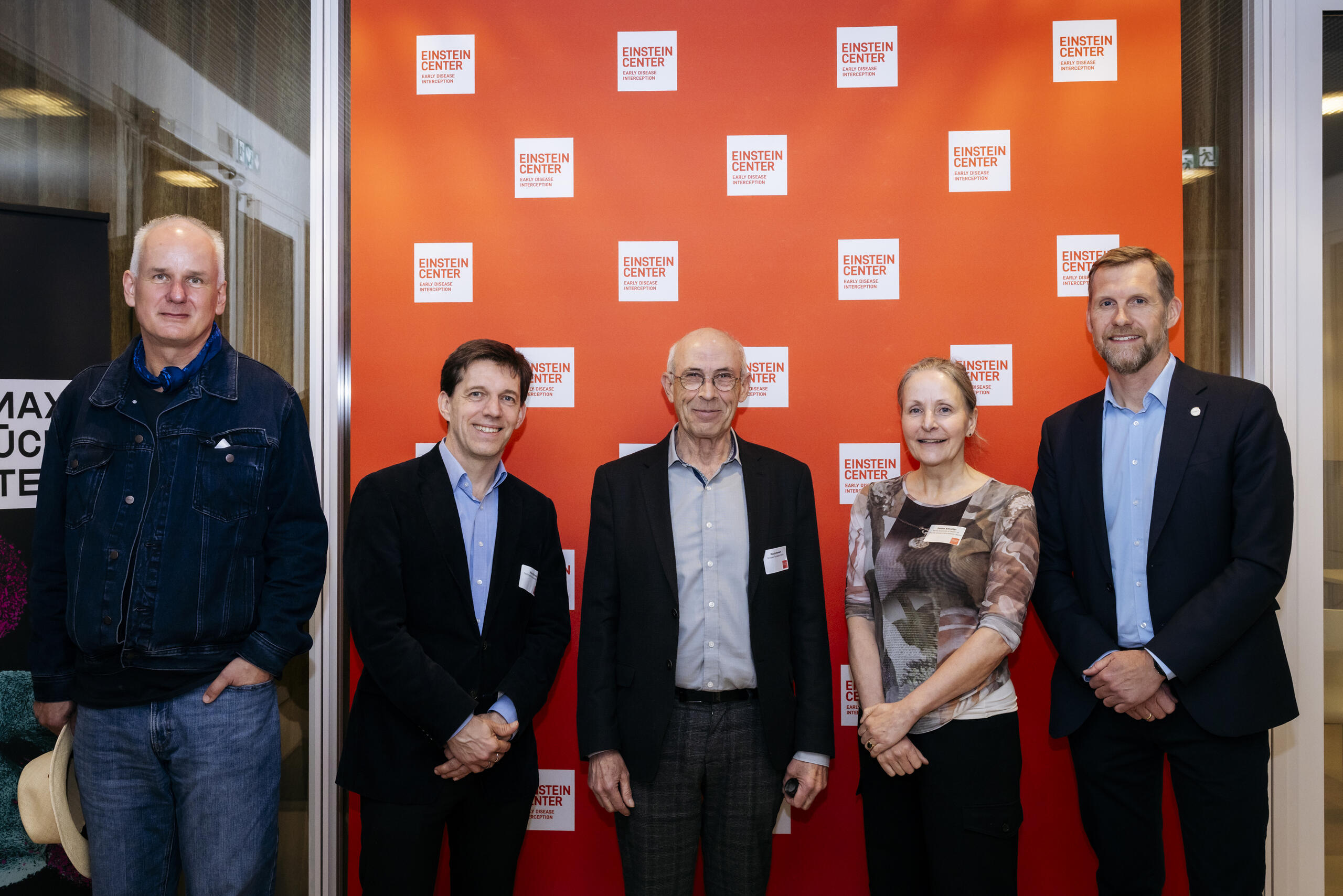
The Chair of the Einstein Foundation Berlin, Prof. Martin Rennert (center), together with the spokespersons of the Einstein Center for Early Disease Interception: (from left to right) Prof. Nikolaus Rajewsky, Prof. Jens Kurreck, Dr. Janine Altmüller and Prof. Leif Erik Sander.
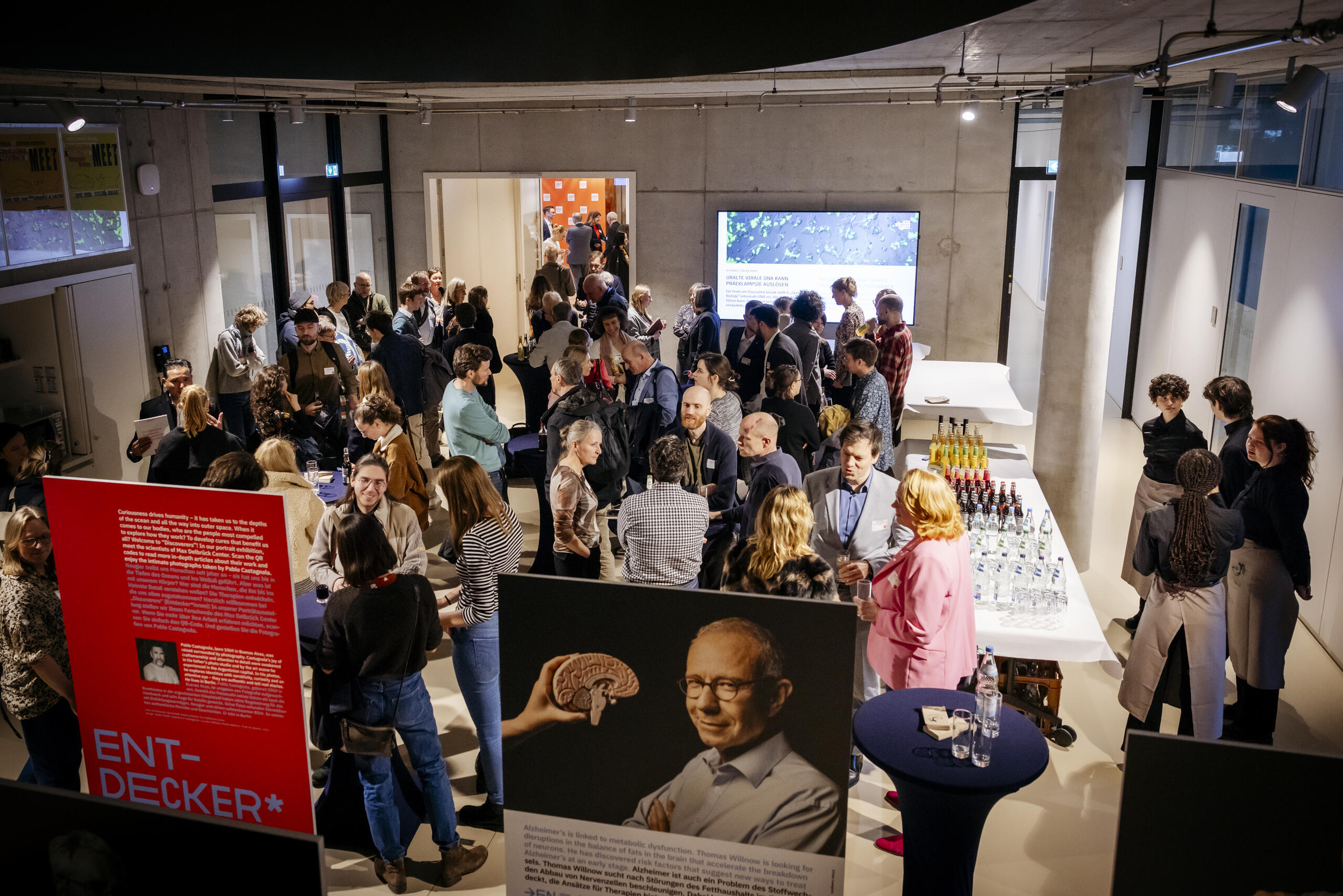
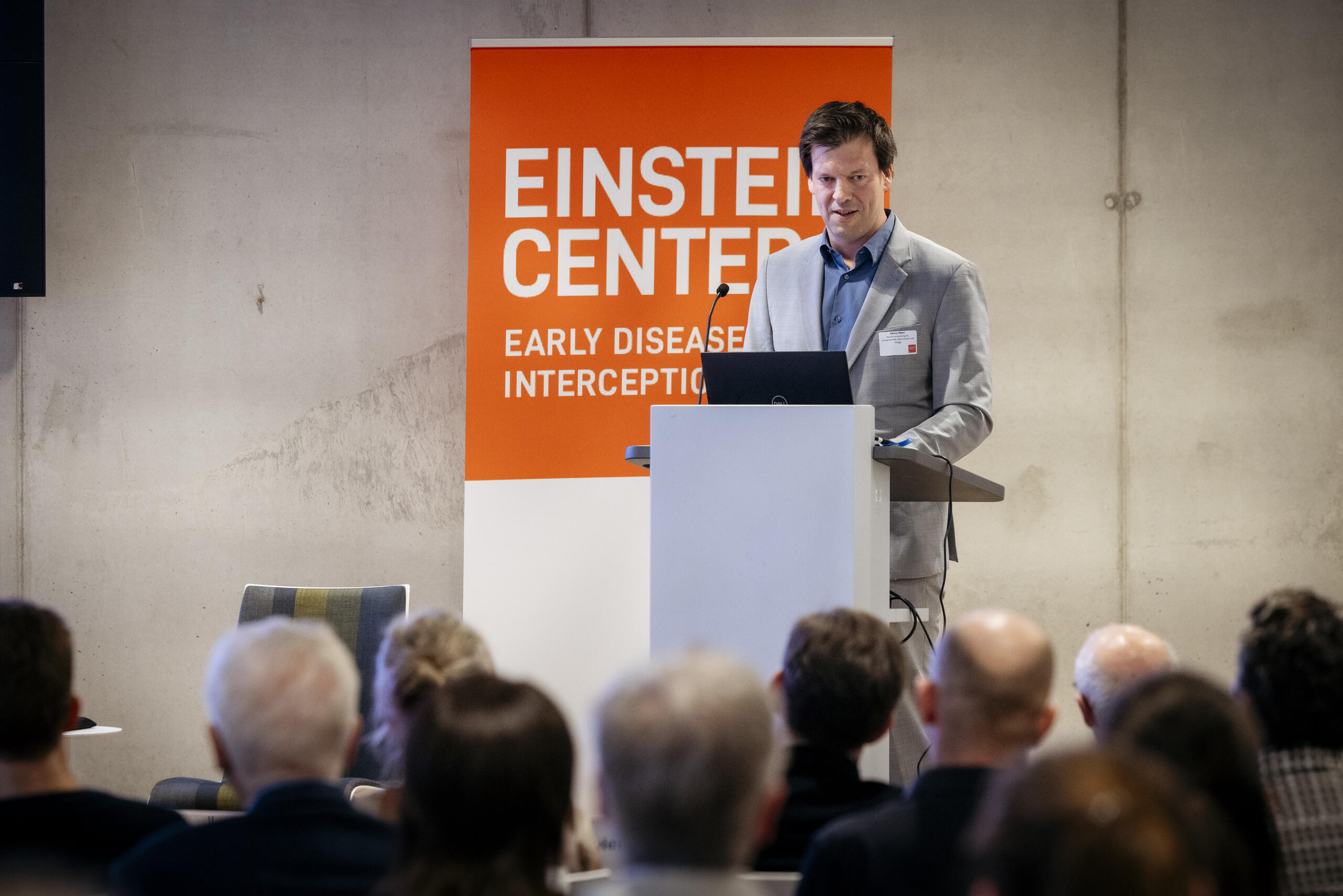
Welcome remarks by Dr. Henry Marx, State Secretary for Science, Berlin Senate Department for Higher Education and Research, Health, and Long-Term Care
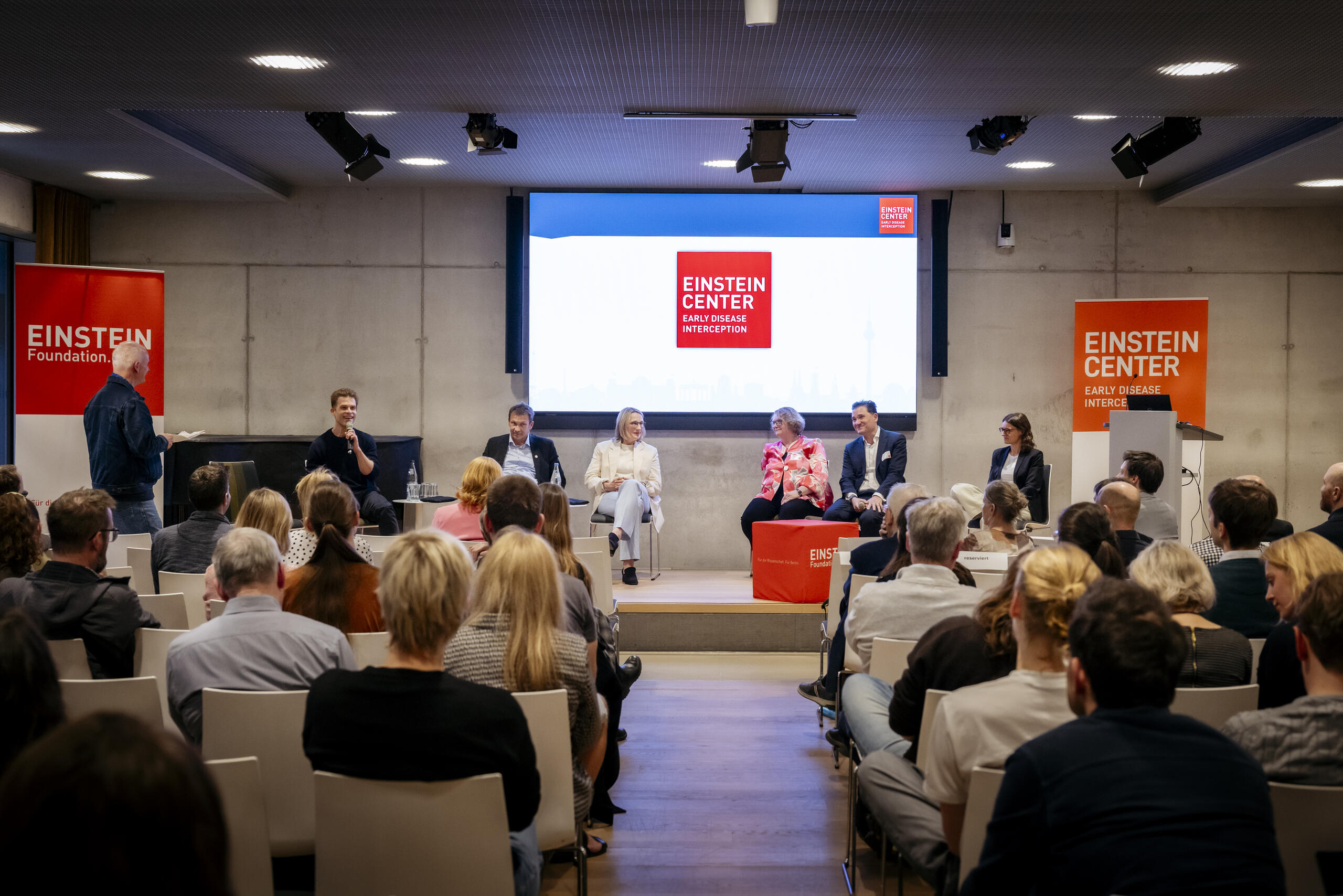
Panel discussion with Bas Kast (author and journalist), Prof. Joachim Spranger (Dean of Charité – Universitätsmedizin Berlin), Prof. Maike Sander (Scientific Director of the Max Delbrück Center), Prof. Angelika Eggert (CEO of University Hospital Essen), Prof. Surjo R. Soekadar (Einstein Professor at Charité and CIO of the ARC Innovation Center), and Laura Möller (CEO of JUNI)

Professor Leif Erik Sander (Project Head; Director of the Department of Infectious Diseases and Critical Care Medicine at Charité and Research Group Leader at BIH):
“Conventional methods often fail to detect the early signs of emerging diseases. Moreover, we don’t always understand what is actually going wrong at the molecular level or how we could intervene to stop these diseases. This is where early disease interception comes in: Using high-resolution technologies, we aim to understand what sets things on the wrong track and to create opportunities to correct that course very early on. The train, so to speak, needs to be put back on the track to health. We want to use our findings to develop innovative solutions, such as new diagnostic tests and medications. This is how research leads to medical progress and value creation – and strengthens Berlin as a hub for innovation and business.”
Dr. Janine Altmüller (Head of the Core Unit Genomics at the Berlin Institute of Health at Charité, BIH):
“New methods are key to the Einstein Center’s vision: Never before has it been possible to examine characteristic features such as nucleic acids or proteins of individual cells in their natural tissue context with such precision and high resolution. Even the smallest changes that mark the onset of a disease can now be digitalized and, with the help of AI for example, better deciphered and understood. This knowledge is crucial for developing targeted interventions. At the Einstein Center, experts from various disciplines will be working together toward this goal, thereby accelerating the translation of scientific findings into clinical applications.”
Professor Jens Kurreck (Executive Director of the Institute of Biotechnology, Technische Universität Berlin):
“The Einstein Center for Early Disease Interception provides a unique platform for close collaboration among leading Berlin-based research institutions and will enable a better understanding of the early mechanisms of disease development using various human models. It is particularly important to offer young scientists access to state-of-the-art technologies within this consortium and to create optimal conditions for them to build their scientific careers.”
Further information
- Interview with Nikolaus Rajewsky and Leif Erik Sander
- Program of the ceremonial opening on March 23, 2026
- Einstein Foundation press release about funding for the new center
- Short description of the Einstein Center for Early Disease Interception
Contacts
Markus Heggen
Press Spokesperson
Charité – Universitätsmedizin Berlin
+49 30 450 570 400
presse@charite.de
Jana Schlütter
Deputy Press Spokesperson
Max Delbrück Center
+49 30 9406 2121
jana.schluetter@mdc-berlin.de
Mirjam Kaplow
Head of Communications
Berlin Institute of Health at Charité (BIH)
+49 162 724 7266
mirjam.kaplow@bih-charite.de
Steffi Terp
Press Spokesperson at TU Berlin
+49 30 3142 3922
pressestelle@tu-berlin.de
Image for download
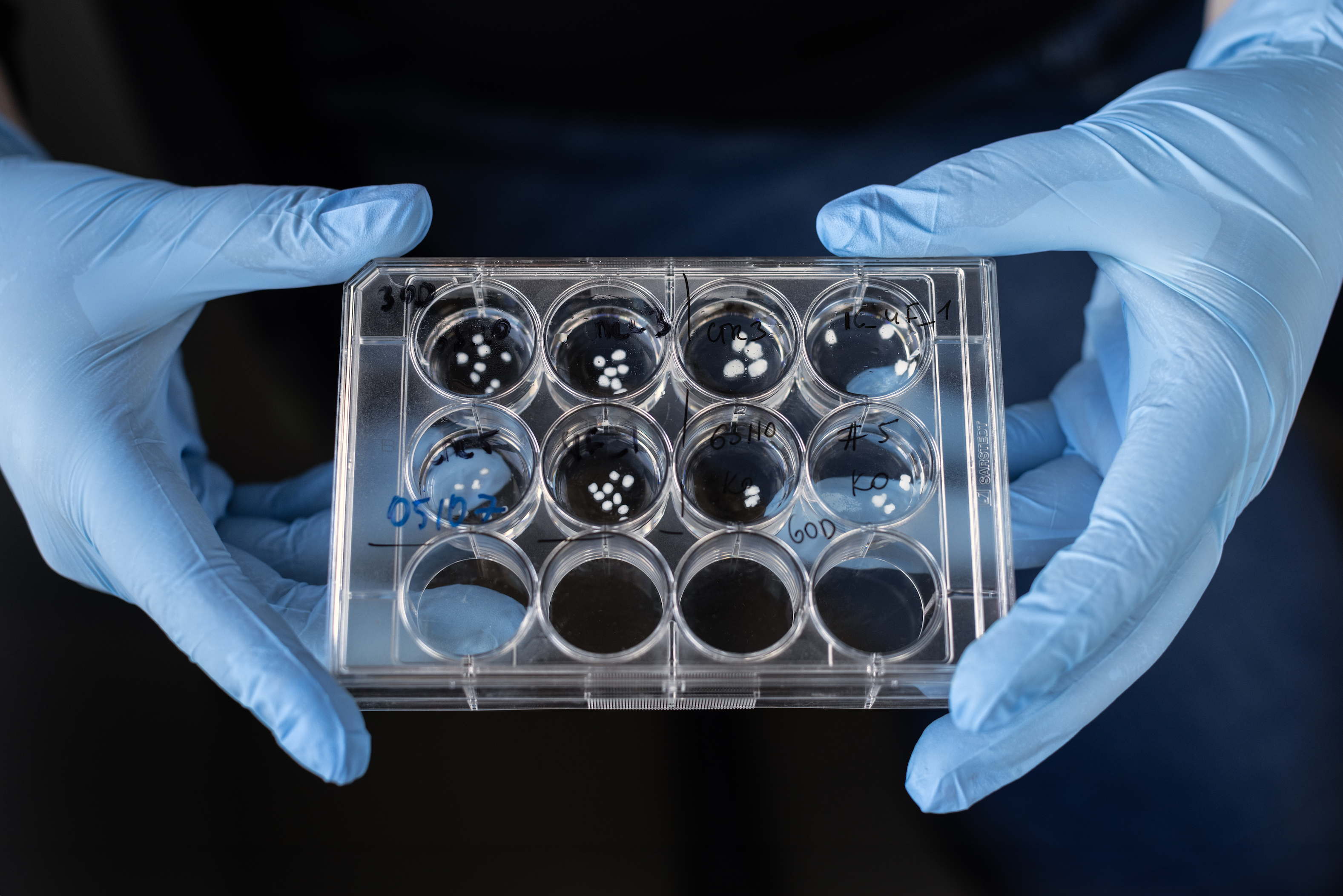
Brain organoids, 30 and 60 days-old in a Petri dish. Photo: Pablo Castagnola, Einstein Foundation Berlin
In this brain organoid, microplastic particles are visible, highlighted in green. Photo: Georg Braune, Rajewsky Lab, Max Delbrück Center