Proteomics and AI identify better biomarkers
Vasculitis is a disease whereby the immune system mistakenly attacks blood vessel walls, causing them to become inflamed. If left untreated, the rare disease can severely damage organs, including the kidneys and lungs. Physicians can treat vasculitis with immunosuppressive medications. But since these drugs often cause serious side effects, they have long sought a way to distinguish people in remission to avoid treating these patients unnecessarily, or to minimize treatment regimens.
A team of researchers and physicians in Berlin now has found a combination of seven proteins in patients’ blood plasma that reliably indicates whether the disease has gone into remission. In the journal “Nature Communications,” the group reports how proteomics and artificial intelligence helped them identify the biomarkers. In principle, their method could also be applied to other immune and inflammatory diseases to make treatment as precise as possible while minimizing side effects.
“Our study shows just how productive the collaboration between the Max Delbrück Center, Charité, ECRC, and BIH has become,” says Dr. Philipp Mertins, head of the Proteomics Technology Platform, which is jointly operated by the Max Delbrück Center and the Berlin Institute of Health at Charité (BIH). Mertins is one of three senior authors of the publication. The other two are Dr. Ralph Kettritz of Charité – Universitätsmedizin Berlin and the Experimental and Clinical Research Center (ECRC), a joint institution of Charité and the Max Delbrück Center, and Dr. Sofia Forslund of the ECRC and the Max Delbrück Center.
Biomarkers to guide treatment
“Existing biomarkers, such as the inflammatory marker CRP, cannot reliably tell us whether a patient is in remission,” explains Dr. Uwe Jerke from Kettritz’s team, who shares first authorship with two other scientists. “For some patients, it takes only three months before we can reduce their medication; for others, it may take six months or longer,” adds nephrologist Kettritz. Better biomarkers are needed to guide treatment, which is what prompted the team to collaborate with other Berlin researchers.
“We first identified proteins present in blood plasma from more than 100 Charité patients with vasculitis, about half of whom were in remission, as well as from a control group of healthy individuals,” explains Dr. Marieluise Kirchner, co-first author from Mertins’ team. She and her colleagues identified several hundred proteins of varying levels depending on disease status.
“My task was then to use machine learning, a form of AI, to find proteins among the hundreds identified that were specific to remission,” says Dr. Theda Bartolomaeus, co-first author and former doctoral researcher in Forslund’s research group who is now a postdoc at the University of Oslo. “The key was to first remove from the analysis all the proteins that could mislead the model, like CRP for example, because they weren’t specific enough.” This was a lengthy learning process, she adds.
A step toward validating the biomarkers
After accounting for all potential confounding factors, the researchers found a combination of seven proteins that could reliably identify remission. They confirmed their findings in a separate group of around 100 patients from Prague on whom blood plasma samples and clinical data were available.
“Advances in proteomics and AI allow us to develop these kinds of multiprotein signatures,” says Mertins. “They capture the biology of complex diseases much more comprehensively than individual protein biomarkers can.”
Right now, the causal relationships between the seven proteins and vasculitis remain unclear, Jerke cautions. “We also don’t have a widely available test yet,” Kettritz adds. The next step is to conduct studies with larger numbers of participants to determine how well the new assay performs in routine clinical practice — and how much patients actually benefit from it.
Text: Anke Brodmerkel
Further information



Kettritz Lab (Charité, German only)
Literature
Uwe Jerke, Marieluise Kirchner, Theda Bartolomaeus, et al. (2026): “Towards a proteomic plasma biomarker panel for diagnosing vasculitis remission.” Nature Communications, DOI: 10.1038/s41467-026 – 75755‑6
Image for download
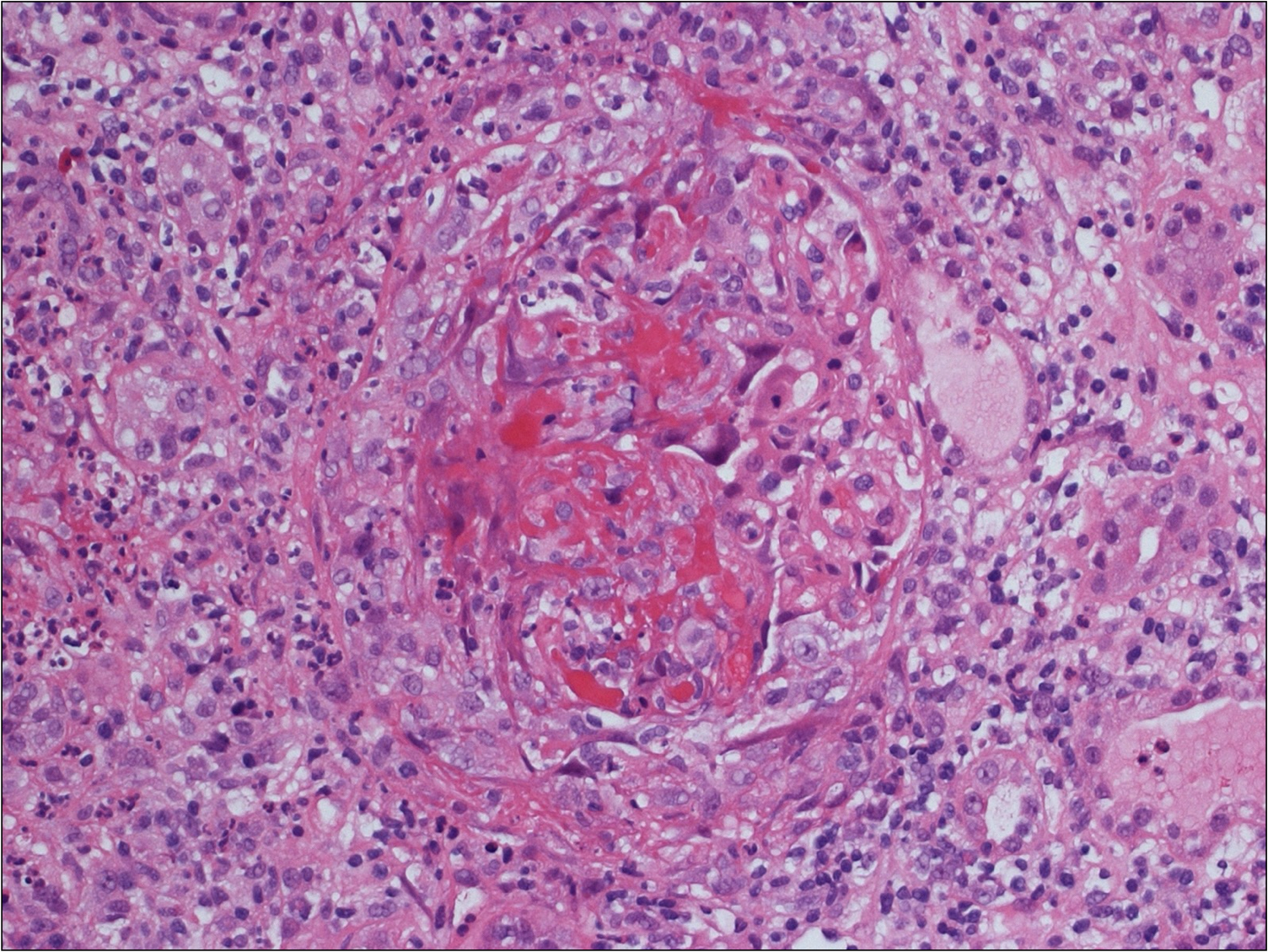
A tissue section showing damage to the fine blood vessels of a renal corpuscle as well as pronounced inflammatory reaction in the surrounding area. Both are typical consequences of vasculitis.
© Institute of Pathology, Charité – Universitätsmedizin Berlin
Contacts
Dr. Philipp Mertins
Group Leader
Proteomics Technology Platform
Max Delbrück Center and Berlin Institute of Health at Charité (BIH)
Philipp.Mertins@mdc-berlin.de
Dr. Sofia Forslund
Group Leader
Host-microbiome factors in cardiovascular disease
Max Delbrück Center und Experimental and Clinical Research Center (ECRC)
Sofia.Forslund@mdc-berlin.de
Prof. Dr. Ralph Kettritz
Department of Nephrology and Medical Intensive Care
Charité — Universitätsmedizin Berlin and Experimental and Clinical Research Center (ECRC)
ralph.kettritz@charite.de
Jana Schlütter
Deputy Head
Communications and Marketing
Max Delbrück Center
+49 30 9406 – 2118
Jana.Schluetter@mdc-berlin.de or presse@mdc-berlin.de
Konstanze Pflüger
Head of Communications
Spokesperson
Berlin Institute of Health in der Charité (BIH)
+49 162 239 38 54
konstanze.pflueger@bih-charite.de
- Max Delbrück Center
The Max Delbrück Center for Molecular Medicine in the Helmholtz Association lays the foundation for the medicine of tomorrow through today’s discoveries. At locations in Berlin-Buch, Berlin-Mitte, Heidelberg, and Mannheim, interdisciplinary teams investigate the complexity of disease at the systems level – from molecules and cells to organs and entire organisms. Together with academic, clinical, and industry partners, and as part of global networks, we turn biological insights into innovations for early detection, personalized therapies, and disease prevention. Founded in 1992, the Max Delbrück Center is home to a vibrant, international research community of around 1,800 people from over 70 countries. We are 90 percent funded by the German federal government and 10 percent by the state of Berlin.